Visiting the Carthage Ruins: A Practical Guide
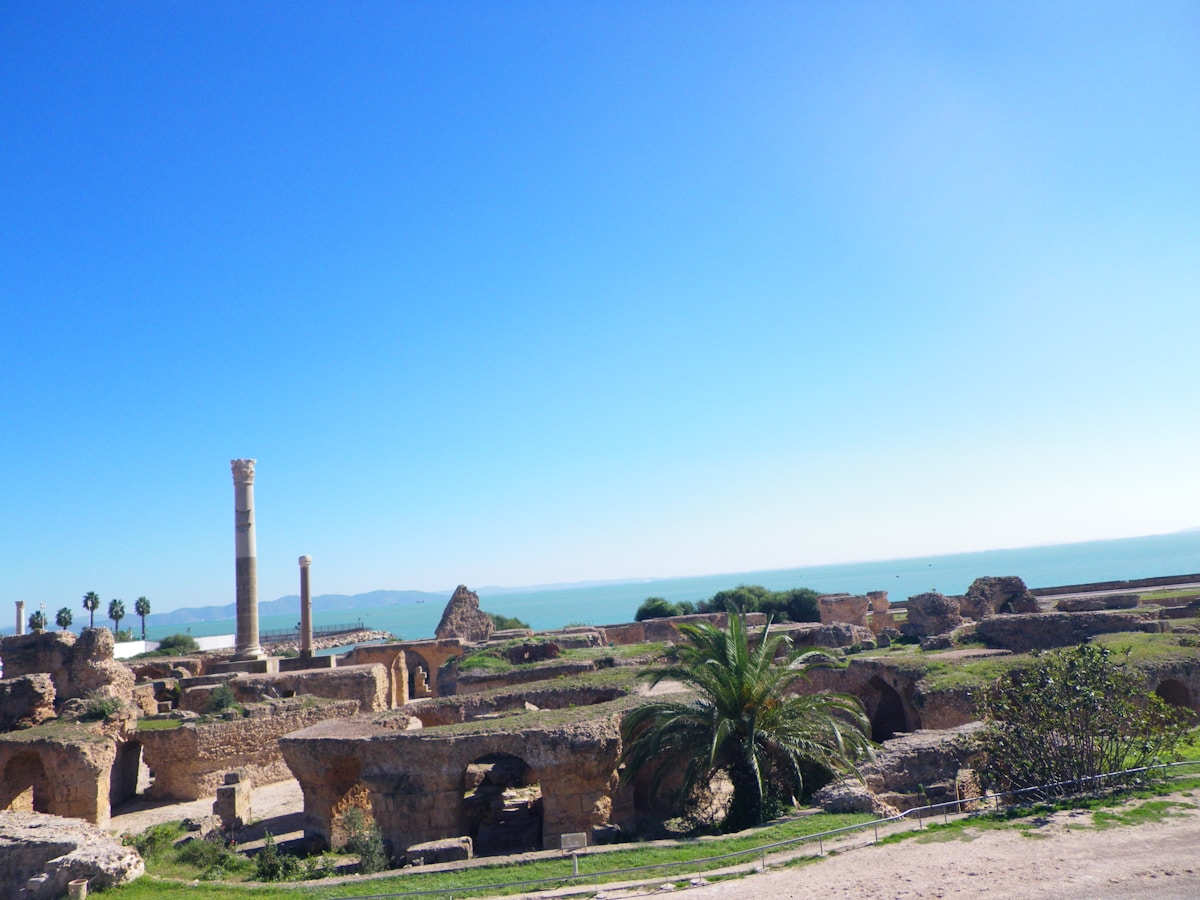
Carthage was once the wealthiest city in the western Mediterranean and the capital of an empire that challenged Rome for control of the known world. Today its ruins are spread across a residential suburb of Tunis, easy to reach by light rail and manageable as a half-day or full-day excursion.
What Was Carthage?
Founded by Phoenician settlers from Tyre (modern Lebanon) around 814 BCE, Carthage grew to control trade routes across the western Mediterranean. At its peak it ruled parts of North Africa, Spain, Sicily, and Sardinia, and its armies — led by Hannibal Barca — crossed the Alps to threaten Rome itself. After three Punic Wars, Rome destroyed Carthage in 146 BCE, then rebuilt it as a major Roman provincial capital. The ruins you see today date primarily from that Roman period, overlaid on far older Punic remains.
In 1979, UNESCO designated the site a World Heritage Site.
The Main Sites
Carthage’s ruins are spread over several distinct areas roughly 500 m to 1 km apart. A combined ticket covers all of them.
Antonine Baths
The most photogenic site at Carthage. Built under Emperor Antoninus Pius (138–161 CE), these were among the largest baths in the Roman world, ranking alongside those in Rome itself. What remains are enormous brick walls, carved column bases, and a dramatic seafront setting. Entering from the TGM Carthage-Hannibal stop, you pass the ruins before you even reach the ticket desk — their scale sets the tone for the rest of the visit.
Open daily approximately 08:00–18:00 (May–September), 08:30–17:00 (October–April) — verify locally as hours can shift.
Byrsa Hill and the National Museum of Carthage
The hill where the original Punic citadel stood. Today, the Acropolium (a former cathedral, now used for concerts) dominates the summit, and the National Museum of Carthage sits alongside it. The museum holds Punic funerary masks, jewellery, pottery, and Roman-era mosaics. The hilltop view over the Gulf of Tunis is excellent on clear days.
The Tophet (Sanctuary of Ba’al Hammon)
A Punic sanctuary where, according to ancient sources, children were sacrificed — though the interpretation remains contested among archaeologists. What is certain is that thousands of urns containing cremated remains (many of infants, some of lambs or birds) were buried here. It is an unusual and sombre place, with inscribed stelae still standing in rows.
Punic Ports
Two circular harbours visible from the road — one military, one commercial. The outlines are clear but the remains are mostly underwater or reduced to earthworks. The Oceanographic Museum of Carthage nearby explains the harbour archaeology in more detail.
Roman Villas and Cisterns
Scattered mosaics, column remnants, and the massive La Malga cisterns (a Roman water storage system) are included in the combined ticket area and well worth seeing if you have time.
Combined Ticket and Practical Details
A single combined ticket (approximately 12 TND for adults, approximately 5 TND for students with valid ID, as of 2026) grants entry to all sites in the Carthage UNESCO perimeter. Purchase the ticket at the Antonine Baths, the Tophet, or the Byrsa Hill museum — any of the staffed entry points.
The sites are open daily. Summer hours typically extend to 18:00 or 19:00; winter hours close earlier (around 17:00). Confirm current opening times at the first site you visit.
There is no single entrance gate — the sites are reached by separate paths around a residential neighbourhood. A basic map is included with the ticket.
Getting There
By TGM light rail (recommended): Board at Tunis Marine station near the city centre. Carthage has four stops — Carthage-Salammbô (near the Tophet and ports), Carthage-Hannibal (Antonine Baths, closest to the main ruins), Carthage-Dermech (Byrsa Hill and museum), and Carthage-Présidence. Buy a ticket at the station for approximately 1 TND each way. The journey is around 25 minutes.
By taxi: From central Tunis, a taxi to Carthage takes 20–30 minutes and costs approximately 15–25 TND depending on traffic.
By car: Parking is available near the Antonine Baths and on Byrsa Hill, though the roads through the residential area are narrow.
Combining with Sidi Bou Said
Most visitors combine Carthage with Sidi Bou Said, the hilltop village just one TGM stop further along the line. The standard itinerary is: Carthage-Hannibal (Antonine Baths) → walk to Carthage-Dermech (Byrsa museum) → TGM to Sidi Bou Said → lunch at Café des Nattes → return to Tunis. Allow a full day. For a broader overview of the site and its history, see our Carthage destination guide. If you want to plan how to divide your time between the ruins and the village, our Sidi Bou Said vs Carthage comparison covers each site’s highlights. For a guided day with transport included, our Tunis, Carthage and Sidi Bou Said tours guide covers the best options. Book your Tunis, Carthage and Sidi Bou Said tour in advance during peak season (April–June, September–October) when spaces fill quickly.
Tips for Your Visit
- Water and shade: The Antonine Baths have almost no shade in summer. Bring 1.5 litres per person and a hat. Byrsa Hill has more trees.
- Footwear: Uneven stone and gravel paths throughout. Trainers or walking shoes are better than sandals.
- Photography: The Antonine Baths look best in morning light (before 11:00 in summer). The view from Byrsa Hill is clearest in the early afternoon when haze settles.
- Crowds: The site is busiest from 10:00 to 13:00 on weekends and during French school holidays. Arriving at 08:30 gives you the ruins largely to yourself.
- Guides: Licensed guides are available at the main sites for approximately 30–50 TND for 2 hours. Worth considering for the Tophet and museum, where historical context enriches the visit considerably.
Frequently Asked Questions
- How do I get to Carthage from Tunis?
- The TGM light rail (Tunis–Goulette–Marsa) runs from Tunis Marine station directly to several Carthage stops. Carthage-Hannibal and Carthage-Dermech are the most useful. The journey takes around 25 minutes and costs approximately 1 TND each way as of 2026.
- How much does it cost to enter Carthage?
- Carthage is a UNESCO World Heritage Site managed as a collection of separate sites under one combined ticket. The combined ticket costs approximately 12 TND for adults as of 2026, covering the Antonine Baths, the Tophet, the Byrsa Hill museum, and several other areas. Prices can change — verify at the ticket desk on arrival.
- How long do you need at Carthage?
- Rushing through the key sites takes 2.5–3 hours. To cover everything comfortably — including the National Museum of Carthage on Byrsa Hill — allow a full morning or afternoon (4–5 hours). Combining Carthage with Sidi Bou Said makes a popular full-day itinerary.
- Is Carthage suitable for children?
- Yes, though the sites involve uneven terrain and walking on cobblestones. The Antonine Baths have dramatic open ruins that engage younger visitors. Shade is limited in summer — bring water and a hat for everyone.
Book Tours & Experiences in Tunisia
Find guided day trips, Sahara tours, cultural circuits, and city experiences — all bookable online before you arrive.
Browse tours on GetYourGuide →Best price guaranteed — same price as booking direct. We earn a small commission at no extra cost to you.