El Jem Amphitheatre: Visitor Guide and What to Expect
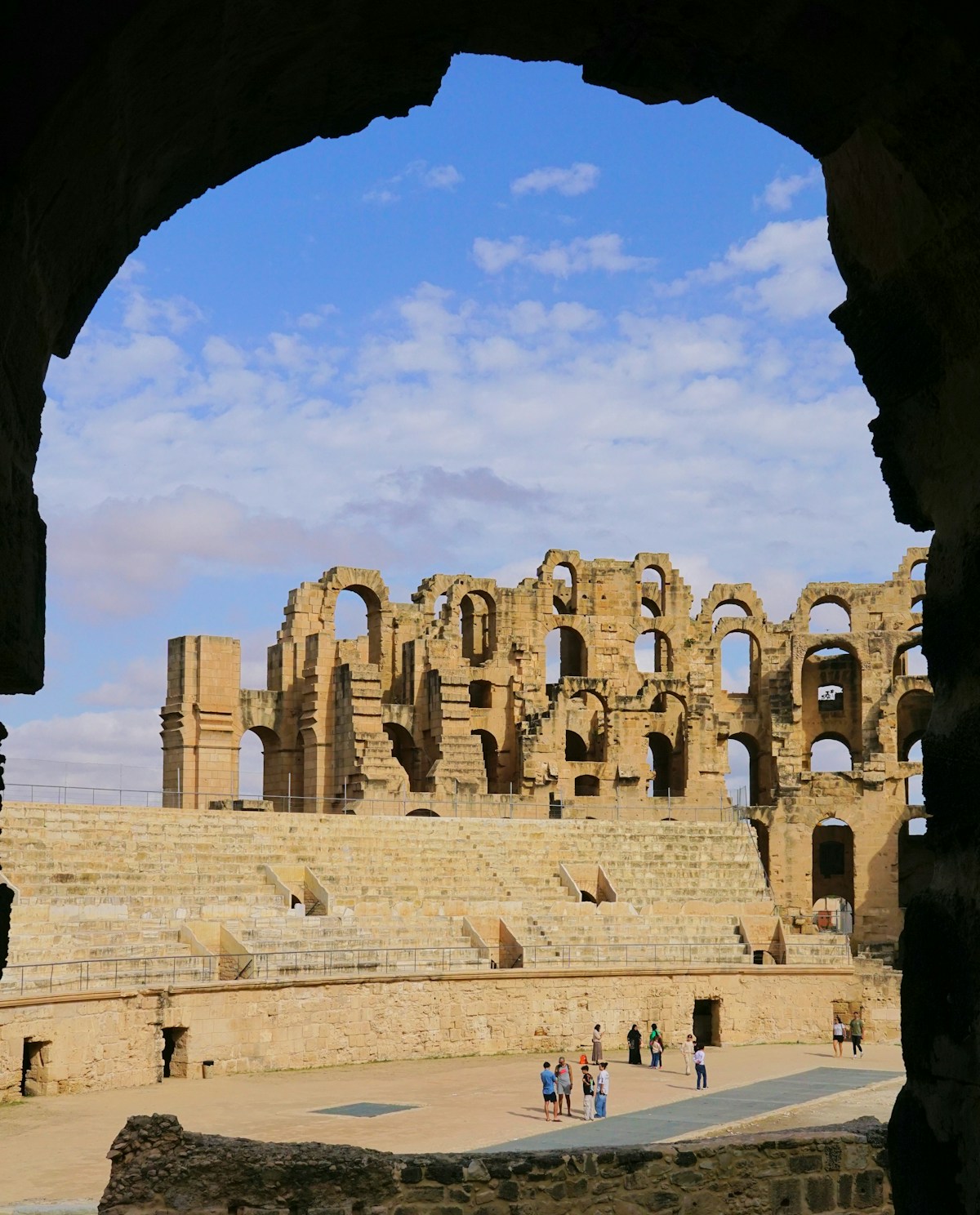
The Roman amphitheatre at El Jem is one of the largest and best-preserved in the world — larger than many arenas in Italy and rivalling the Colosseum in Rome for sheer presence. It stands in the centre of a modest market town in central Tunisia, looming over the surrounding streets in a way that takes most visitors completely by surprise. For broader context on the town and surrounding area, see our El Jem destination guide.
Why El Jem Stands Out
Built around 238 CE during the reign of Emperor Gordian I, the amphitheatre (officially Thysdrus in Roman times) was designed to hold approximately 35,000 spectators. The town that hosted it was then a wealthy centre of olive oil production — the agricultural heartland of Roman Africa Proconsularis.
Unlike the Colosseum, El Jem was never fully cannibalised for building materials during the medieval period, which is why three full storeys of the elliptical outer wall remain largely intact on the eastern side. Walking around the exterior, you can see arched galleries, carved keystones, and columns in various states of preservation — an architectural record almost untouched by centuries of later construction.
In 1979, UNESCO added El Jem to its World Heritage List.
What to See
The Arena Floor and Subterranean Passages
The central arena floor is partially open, and visitors can descend into the underground vaulted passages that once held animals, gladiators, and stage machinery. These corridors are cool even in summer and give a visceral sense of what the spectacles below the grandstand actually involved. The light filtering through the arches above is impressive.
The Upper Tiers
Where the seating once stood, you can now walk along rough stone terraces to the highest accessible level. The view from the top — looking down into the open arena and out across the flat olive-grove plains — is one of the best panoramas in central Tunisia. The scale only becomes fully apparent when you’re at the top looking down.
The Archaeological Museum
A 5-minute walk from the amphitheatre, the El Jem Archaeological Museum contains some of the finest Roman mosaics in North Africa. Room after room is laid with original floor mosaics excavated from nearby Roman villas — hunting scenes, mythological subjects, geometric patterns — all in excellent condition. The museum is included in the same ticket as the amphitheatre and is well worth 30–45 minutes.
Tickets and Opening Hours
Combined ticket (amphitheatre + museum): approximately 12 TND for adults, approximately 5 TND for students with valid ID, as of 2026.
Opening hours (approximate — verify on arrival):
- Summer (May–September): 07:00–19:00
- Winter (October–April): 08:00–17:00
The site is open daily, including weekends and public holidays. There is no significant queue system — buy your ticket at the main entrance gate next to the amphitheatre.
El Jem International Festival of Symphonic Music takes place in the amphitheatre each July. Evening concerts use the ancient space as a natural acoustic stage. If you are visiting in July, check dates directly with the organisers — tickets sell out weeks in advance.
Getting There
By train from Sousse: The most convenient option. Trains run regularly from Sousse to Sfax; El Jem station is on this line. Journey time is approximately 50–70 minutes. Ticket price is approximately 4–6 TND one way as of 2026.
By train from Tunis: Direct trains on the Tunis–Sfax line stop at El Jem. Journey time is approximately 2.5–3 hours. From approximately 15–20 TND one way.
By louage from Sousse: Louages (shared taxis) run to Sfax from Sousse Bab Jedid station; ask to be dropped at El Jem (they pass through). Approximately 6–8 TND, journey 1 hour.
By car from Sousse: 65 km south on the GP1 main road, about 45 minutes. Parking is available around the amphitheatre. The drive through flat agricultural plains is easy.
By car from Tunis: 220 km south, approximately 2.5 hours. A manageable day trip if you leave early.
Practical Tips
- Best time to visit: October to April avoids summer heat. If visiting in summer (June–August), arrive early (08:00–09:00) before the arena stone heats up.
- Shade: There is almost none inside the amphitheatre. Hat and water essential in any season.
- Photography: The exterior eastern wall photographs best in morning light. The interior arena is most dramatic mid-afternoon when shadows shift across the tiers.
- Guides: Independent licensed guides offer tours at the entrance for approximately 20–30 TND for 1 hour. The historical context of gladiatorial combat and the Roman economy of central Tunisia enriches the visit considerably.
- Café and lunch: There are several simple restaurants and cafés in the town centre, a 5-minute walk from the amphitheatre. Lunch for two costs approximately 15–25 TND at local restaurants.
- Combine with: Mahdia (30 km east, on the coast) makes a good afternoon addition — the old medina and seafront are pleasant after a morning at El Jem. El Jem also pairs naturally with Sousse (60 km north) and Kairouan (90 km northwest) on a central Tunisia circuit. Both are commonly combined in guided day trips from Tunis. You can book Tunisia attraction tickets in advance to skip the queue at the amphitheatre entrance.
Frequently Asked Questions
- How do I get to El Jem from Sousse or Tunis?
- From Sousse, take a train (approximately 1 hour, from around 4–6 TND) or louage south towards Sfax — El Jem is on the main line. From Tunis, the train takes approximately 2.5–3 hours to El Jem station. The amphitheatre is a short walk from the station.
- What are El Jem's opening hours and ticket prices?
- The amphitheatre opens daily. As of 2026, the ticket costs approximately 12 TND for adults and includes entry to the adjacent museum. Opening hours are typically 07:00–19:00 in summer and 08:00–17:00 in winter — confirm at the site as hours vary seasonally.
- How long should I spend at El Jem?
- The amphitheatre itself takes 60–90 minutes to explore properly. Add the archaeological museum next door (another 30–45 minutes) and you have a very satisfying 2–2.5 hour visit. Most people combine it with a lunch stop in the town.
- Is El Jem worth a special trip from Tunis?
- Yes, if Roman history interests you. The amphitheatre is one of the best-preserved Roman monuments in the world and sees far fewer visitors than comparable Italian sites. The train journey through central Tunisian plains is pleasant too. Allow a full day including travel.
Book Tours & Experiences in Tunisia
Find guided day trips, Sahara tours, cultural circuits, and city experiences — all bookable online before you arrive.
Browse tours on GetYourGuide →Best price guaranteed — same price as booking direct. We earn a small commission at no extra cost to you.