Sfax Travel Guide: Tunisia's Second City
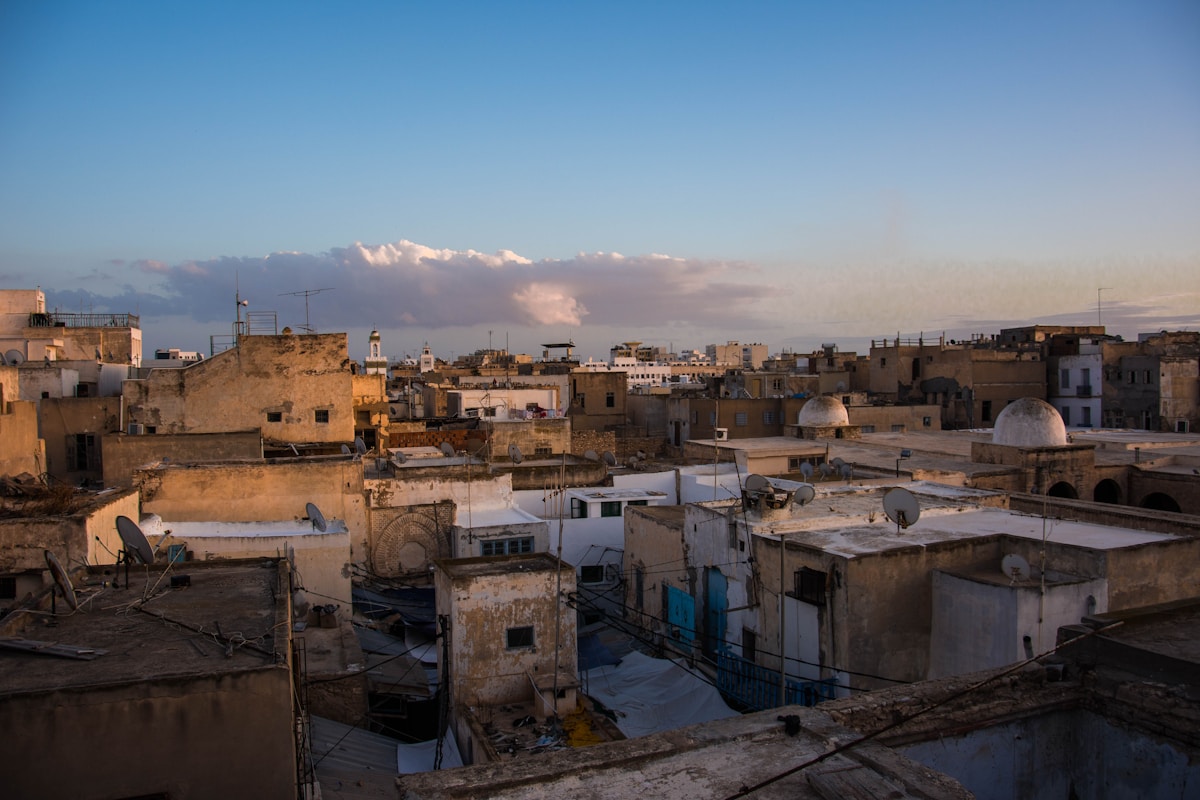
Sfax is Tunisia’s second-largest city and it operates on a different register from the resort towns of the north. There is no beach, no package-holiday strip, and very little tourist infrastructure. What it does have is one of the most complete walled medinas in North Africa, a commercial port with genuine working energy, and a position as the main gateway to the Kerkennah Islands.
For travellers who want to see how a Tunisian city actually functions — markets, craftsmen, merchants, daily life — Sfax is more instructive than anywhere on the coastal tourist circuit.
The Sfax Medina
The medina at Sfax is enclosed by walls that are largely intact, giving the old city a more defined boundary than you find in Tunis or Kairouan. The main entry point for visitors is Bab Diwan, the ornamental gate on the western side, and from there a network of covered souks leads inward toward the Great Mosque.
The Great Mosque (Jami el-Kebir) was founded in the 9th century and is one of the oldest in Tunisia after Kairouan. Non-Muslims cannot enter the prayer hall but can view the minaret and exterior courtyard. The structure has been expanded several times over the centuries; what you see today includes work from multiple Aghlabid and Hafsid periods.
The surrounding souks are organised by trade in the traditional North African pattern — copper smiths, fabric merchants, leatherworkers, and spice dealers each in their own section. The copper and metalwork souks are particularly active; Sfax has a tradition of metalwork that predates tourism. Prices here are what Tunisian buyers actually pay, not tourist markups.
The kasbah, at the southeastern corner of the medina, houses the Dar Jellouli Museum. The museum is installed in an 18th-century mansion and covers traditional costumes, manuscripts, and decorative arts from the Sfax region. Entry costs approximately 5 TND as of 2026; opening hours are Tuesday to Sunday, 9am–4pm (closed Monday).
The Port and New Town
Beyond the medina, Sfax has a functional city centre with French colonial-era avenues, a corniche along the coast, and a large commercial port. The port handles agricultural exports (olive oil from the Sfax region accounts for a significant share of Tunisia’s total production), fishing, and ferry traffic to the Kerkennah Islands.
The central market on Avenue de la République is worth visiting for the produce section alone — olives, dates, preserved lemons, and spices laid out in the North African market style. The fish market adjacent to the port is one of the best in Tunisia given the city’s position between the Mediterranean and the Kerkennah fishing grounds.
Getting to Sfax
By train: SNCFT runs several services daily between Tunis and Sfax. Journey time is approximately 3.5 hours; fares start at around 18 TND in second class as of 2026. The station is centrally located on Avenue Farhat Hached, within walking distance of both the medina and the port.
By louage: Shared taxis from Tunis Bab Alioua station take around 3 hours and cost approximately 15–17 TND per seat. Louages from Sousse to Sfax take around 1.5 hours. The louage station in Sfax is on Avenue Commandant Béjaoui, about 15 minutes’ walk from the medina.
By car: The A1 motorway connects Tunis and Sfax in approximately 3 hours. Driving gives more flexibility for the onward journey south toward Gabès or Djerba.
Where to Stay in Sfax
Sfax has limited tourist accommodation compared to the coast, but several good options exist in the city centre.
Hôtel Thyna (Avenue Habib Maâzoun) is a reliable mid-range option with a central location. Rooms from approximately 120–180 TND per night as of 2026.
Les Oliviers is a business hotel near the train station with comfortable rooms and parking. Rates from approximately 150–220 TND as of 2026.
For travellers passing through en route to Kerkennah, a single night in Sfax is usually sufficient. Most visitors use it as a base for a medina visit and an onward ferry connection.
Where to Eat in Sfax
The cuisine of Sfax has its own identity within Tunisian cooking. Dishes tend to be more spiced and fish-heavy than in the north, reflecting the city’s position as a fishing port.
Restaurant Le Corail near the port area serves strong Sfaxian fish dishes — grilled sea bream, swordfish, and the local speciality of poisson au four (oven-baked fish with olives and capers). A main course costs approximately 15–30 TND as of 2026.
Restaurant La Médina (inside the medina walls) offers a more traditional Tunisian menu including couscous and lamb dishes at local prices, typically 8–15 TND per person.
The covered market on Avenue de la République has cheap sandwich stalls and brik vendors for a fast lunch.
The Kerkennah Islands Ferry
The main practical reason many visitors stop in Sfax is to catch the ferry to Kerkennah. The SONOTRAK ferry terminal is at the commercial port, approximately 2 kilometres from the city centre. Taxis from the medina to the port take around 10 minutes and cost approximately 4–6 TND.
Several sailings run daily, increasing to roughly 8–10 departures in summer. The crossing takes around 1 hour 15 minutes to Sidi Youssef, the arrival point on the main Kerkennah island. The ferry also carries vehicles — useful if you want to explore the islands by car or motorbike rather than relying on the limited local transport.
Sfax as a Southern Tunisia Base
Sfax is also a useful staging point for journeys further south. The city is 130 kilometres from Gabès and around 200 kilometres from Djerba — manageable distances for travellers working down the Tunisian coast rather than flying direct to Djerba airport.
The Sfax region itself produces around 35% of Tunisia’s olive oil, and the surrounding countryside — though not dramatic — shows the agricultural heart of the country in a way that the northern coast and Sahara south do not.
For a practical city visit combined with access to the quietest major island in Tunisia, Sfax and the Kerkennah Islands together form one of the most distinctive and least-touristed itinerary combinations in the country. El Jem is an easy side trip — the Roman amphitheatre is approximately 60 km north and well worth a visit en route from Sousse. Before you travel, make sure you have travel insurance for Tunisia in place — useful cover for medical costs and trip disruptions.
Frequently Asked Questions
- Is Sfax worth visiting in Tunisia?
- Yes, for travellers who want to see a working Tunisian city rather than a resort destination. Sfax has one of the most authentic and best-preserved medinas in the country, an active commercial port, and is the main departure point for ferries to the Kerkennah Islands. It suits travellers who want depth over beach comfort.
- How do you get from Tunis to Sfax?
- The SNCFT train from Tunis to Sfax takes approximately 3.5 hours and is the most comfortable intercity option. Louage shared taxis from Tunis depart from Bab Alioua station and take around 3 hours. The journey by car on the A1 motorway is around 270 kilometres.
- How do you get from Sfax to the Kerkennah Islands?
- The SONOTRAK ferry departs from Sfax commercial port to Sidi Youssef on the main Kerkennah island. The crossing takes approximately 1 hour 15 minutes. Several ferries run daily, with more frequent departures in summer. A single ticket costs approximately 2–3 TND as of 2026.
- What is the best thing to see in Sfax?
- The medina is the main attraction. The walls are largely intact, the Great Mosque dates to the 9th century, and the kasbah houses the regional archaeological museum. Unlike Tunis or Sousse, the Sfax medina functions primarily as a commercial space for locals rather than tourists, which gives it a distinctly different atmosphere.
- Is Sfax safe for tourists?
- Yes. Sfax is a large, functional Tunisian city and generally safe for visitors. The medina is busy during the day with shoppers and tradespeople. Standard city precautions apply — keep valuables out of sight in crowded markets and use licensed taxis.