Tunisia vs Morocco: Which North African Destination Is Right for You?
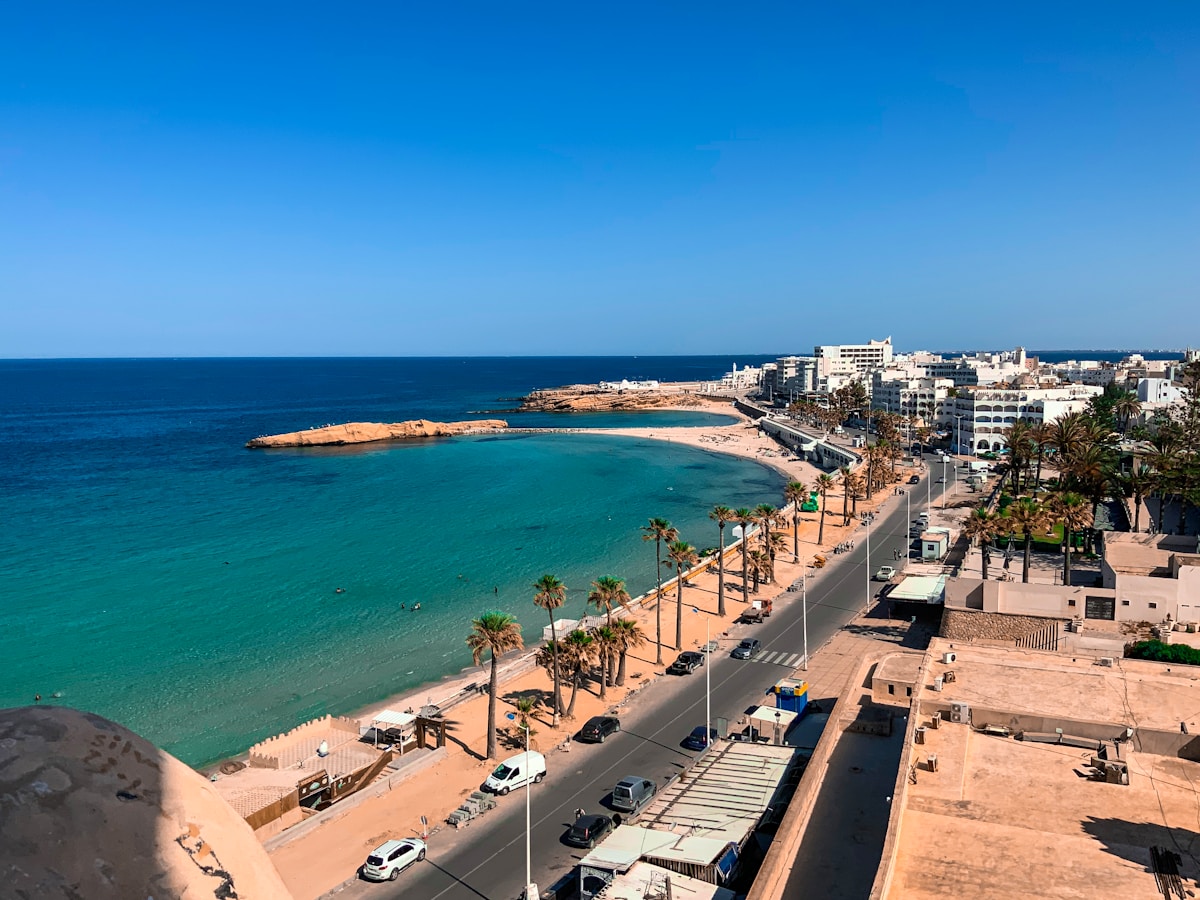
Two countries. One coastline. One ocean. Both in the Maghreb, both with centuries of Arab, Berber, and French influence layered into their medinas, deserts, and cuisines. Tunisia and Morocco are often compared by travellers planning a first trip to North Africa — and the question is a fair one, because they overlap in some areas and diverge sharply in others.
Here is how they compare across every dimension that matters.
Cost: Tunisia Is the Budget Winner
This is the clearest difference between the two countries. Tunisia is significantly cheaper than Morocco at every level.
Tunisia (approximate daily budgets, as of 2026):
- Budget: TND 100–150/day (€30–45) — guesthouse or hostel, street food, local transport
- Mid-range: TND 200–350/day (€60–105) — three-star hotel, sit-down meals, private transfers
Morocco (approximate daily budgets, as of 2026):
- Budget: MAD 400–600/day (€38–58) — riad dormitory or cheap guesthouse, street food, bus
- Mid-range: MAD 800–1,200/day (€77–115) — mid-range riad, restaurant meals, taxis
The gap is real but narrower than it looks in raw numbers. Morocco’s riad culture can push accommodation costs up quickly in cities like Marrakech and Fes. Tunisia’s accommodation is consistently cheaper and, in beach resort areas like Hammamet and Djerba, all-inclusive packages can bring costs down further.
For a full breakdown of what to budget in Tunisia, see our Tunisia travel budget guide.
Where Tunisia is cheaper:
- Domestic transport (louages, buses) — typically 30–40% less than Morocco equivalents
- Eating out — harissa sandwich from a local café: TND 2–4 (approximately €0.60–1.20)
- Alcohol — widely available in Tunisia (unlike many Moroccan cities where access is restricted to licensed hotels and tourist-facing restaurants)
- Entry fees — major Roman sites cost TND 8–12 (approximately €2.50–3.50)
Beaches: Mediterranean vs Atlantic
Tunisia and Morocco offer two different types of coastline, and this is often the deciding factor.
Tunisia’s Mediterranean coast is calmer, warmer, and better for swimming. The sea is tideless, the water temperature peaks at 27°C in August, and the long shallow beaches of Djerba, Hammamet, and Sousse are purpose-built for beach holidays. Djerba in particular — an island connected by causeway — has stretches of near-empty sand outside peak summer months.
Morocco’s Atlantic coast is a different proposition. Taghazout, Essaouira, and Agadir face the full Atlantic: consistent swells, cooler water, and a surf culture that draws people from across Europe. Essaouira adds wind — it is one of the best kitesurfing spots in Africa. Morocco also has a short stretch of Mediterranean coast near Tetouan and Al Hoceima, which is calmer, but this is not the main draw.
Verdict: Tunisia wins for swimming, sunbathing, and resort beach holidays. Morocco wins for surfing, windier Atlantic scenery, and fishing-port character.
Culture and History: Romans vs Imperial Cities
This is where the two countries diverge most clearly.
Tunisia is the Roman archaeology capital of Africa. Dougga is arguably the best-preserved Roman provincial city on the continent — a UNESCO World Heritage Site that most visitors have largely to themselves. El Jem has the third-largest Roman amphitheatre ever built, exceeding the Colosseum in diameter. Carthage — though less dramatic than it sounds — offers Punic and Roman layers in a quiet coastal suburb of Tunis. And for film fans, Star Wars filming locations across the south (Matmata, Ksar Ouled Soltane, Ajim) have become a pilgrimage in their own right.
Morocco’s cultural pull centres on its four Imperial Cities — Marrakech, Fes, Meknes, and Rabat — and their medinas, which are still functioning urban centres, not ruins. Fes el-Bali is one of the largest living medieval cities on earth. The Atlas Mountains add a Berber cultural layer entirely absent from Tunisia: mountain villages, mule tracks, and a pastoral way of life that has changed little in centuries.
Verdict: Tunisia for Roman antiquity and film history. Morocco for Islamic architecture, medina life, and Berber mountain culture.
The Sahara Desert
Both countries offer access to the Sahara, but the experience differs.
Tunisia’s Sahara — the Grand Erg Oriental — is accessible from Douz and Tozeur. Read our full Sahara Desert guide for Tunisia for what to expect. The dunes here are genuine: 15–20 metres high in places, spreading east toward the Algerian border. Ksar Ghilane, a remote camp at an ancient Roman fort, offers perhaps the best balance of isolation and amenity in North African desert travel. Tourist numbers are lower than Morocco — you are unlikely to be part of a large group unless you book one.
Morocco’s Sahara — centred on Merzouga (Erg Chebbi) and Zagora — has more developed tourist infrastructure. Luxury desert camps with en-suite tents and heated pools now line the edges of the dunes. This is not a criticism: the camps are impressive, and the dunes at Erg Chebbi (up to 150 metres) are more dramatic than anything in Tunisia. But you will share the experience with more people.
Verdict: Tunisia for quieter, more affordable desert access. Morocco for more spectacular dunes and more choice of accommodation.
Food
Both cuisines are excellent and under-appreciated outside their home countries.
Tunisian cuisine sits at the Mediterranean end of North African cooking. Harissa — a chilli paste made with roasted red peppers and garlic — is on every table and in almost every dish. Brik (a fried pastry with egg and tuna), shakshuka, grilled fish, and couscous with vegetable stew are the staples. The food is fresher-tasting, more olive-oil-forward, and spicier than Moroccan cooking. Seafood on the coast is exceptional and affordable.
Moroccan cuisine is more complex in its spicing. Ras el hanout, preserved lemons, argan oil, and saffron layer flavours in ways that take longer to work through. Tagine (slow-cooked meat with fruit and nuts), pastilla (a sweet-savoury pigeon or chicken pie), harira (chickpea soup), and the mint tea ceremony are iconic. The food culture is richer as a tourist experience — Morocco has invested in presenting its cuisine as a draw in itself.
Verdict: Both excellent. Tunisian food is fresher and spicier; Moroccan food is more complex and more performed as an experience.
Getting Around
Tunisia is roughly the size of England. Morocco is roughly the size of France — significantly larger with more varied geography.
In Tunisia, you can reach Tunis, Carthage, Djerba, the Roman sites, the Sahara gateway towns of Douz and Tozeur, and the coast all within 1–2 weeks by louage (shared taxi), bus, or rental car. The country rewards a single self-drive loop — north coast → Tunis → central ruins → south Sahara → Djerba — which covers the major highlights without backtracking significantly.
In Morocco, the distances are greater and the geography more varied. Travelling from Marrakech to Fes to the Sahara to the Atlantic coast and back is a 1,500+ km loop. Trains connect the northern cities (Casablanca, Rabat, Fes, Marrakech) efficiently. But reaching the desert requires long bus rides, rental car, or a fly-drive. A thorough Morocco trip rewards 2–3 weeks.
Side-by-Side Comparison
| Category | Tunisia | Morocco |
|---|---|---|
| Daily budget (from) | TND 100 (~€30) | MAD 400 (~€38) |
| Coastline | Mediterranean — calm, warm | Atlantic — surf, cooler |
| Roman archaeology | Outstanding (Dougga, El Jem, Carthage) | Limited |
| Islamic medinas | Good (Tunis, Kairouan, Sfax) | Outstanding (Fes, Marrakech) |
| Sahara access | Yes — quieter, smaller dunes | Yes — more developed, larger dunes |
| Language | Arabic + French | Arabic + French + Darija; more English in tourist areas |
| International flights | Fewer, mainly European | More, wider connections |
| Tourism crowds | Lower | Higher |
| Safety | Standard precautions | Standard precautions |
| Country size | Compact (1–2 weeks) | Larger (2–3 weeks) |
| Alcohol | Widely available | Restricted in many areas |
Tourism Infrastructure and Language
Morocco has had a longer runway as an international tourism destination. Marrakech airport handles 8+ million passengers annually; direct flights connect from New York, London, Paris, Dubai, and dozens of other cities. The guided tour industry is mature, with everything from budget group tours to high-end private itineraries widely available in English.
Tunisia’s tourism is recovering from a decade-long dip following political unrest in 2011 and the 2015 terrorist incidents. The industry has stabilised and grown since 2019, but international flight connections remain predominantly European (London, Paris, Rome, Frankfurt, Madrid). North American travellers will typically connect via Europe. The result: fewer crowds, more genuine interactions, and an industry that has not yet fully commodified the experience.
Both countries have Arabic and French as the dominant languages. In Morocco, English is increasingly common in tourist areas — Marrakech riads, Fes guided tours, Atlas mountain trekking operators. In Tunisia, French is more useful than English in most non-resort contexts, though English is spreading in the main cities.
Who Should Go Where
Choose Tunisia if you:
- Are watching your budget closely
- Want Roman history without crowds
- Are after a Mediterranean beach holiday
- Have 7–10 days and want to cover a lot in a short time
- Prefer a quieter, less-commercialised experience
- Are interested in Star Wars or film location travel
Choose Morocco if you:
- Want iconic medina and riad culture
- Are interested in mountain trekking (Atlas, Rif)
- Want to surf the Atlantic
- Value wider tourism infrastructure and English-language services
- Have 2–3 weeks and want more geographic variety
- Are travelling from North America (more direct flights)
Both countries are safe, welcoming, and rewarding. Tunisia simply does it for less money and with smaller crowds. Morocco does it with more spectacle and a stronger international travel ecosystem. Neither choice is wrong — it depends on what you’re after. If Tunisia is the answer, search flights to Tunisia and browse guided tours to start planning — the country rewards the extra research.
Plan Your Trip
✈️ Book your flights to Tunisia 🛡️ Get travel insurance 📱 Stay connected with an eSIM 🚗 Rent a car
Frequently Asked Questions
- Is Tunisia cheaper than Morocco?
- Yes — Tunisia is noticeably cheaper. Budget travellers can cover accommodation, food, and transport for approximately TND 100–150 per day (roughly €30–45). The equivalent in Morocco runs to MAD 400–600 per day (€38–58). At mid-range, the gap widens further. Tunisia's lower cost base makes it the better choice for budget-conscious travellers.
- Is Tunisia safe for tourists?
- Yes. Tunisia is safe for tourists who apply normal precautions. The FCO and US State Department rate most tourist areas as standard travel risk. The usual advice applies: avoid poorly lit areas at night, be alert in busy medinas, and stay updated on government travel advisories. Morocco carries similar safety ratings.
- Can you visit Tunisia and Morocco in one trip?
- Yes, but it requires planning. There are no direct flights between Tunis and major Moroccan cities — you'll typically connect through European hubs (Lisbon, Paris, Madrid). A combined trip of 3–4 weeks works well: 10–12 days in Tunisia, fly home via Europe and back to Morocco for another 10–12 days. It's not a simple land border crossing.
- Which country has better beaches?
- That depends on what you want. Tunisia has the longer Mediterranean coastline with calmer, warmer water ideal for swimming — Djerba, Hammamet, and Sousse are well-developed beach destinations. Morocco's Atlantic coast offers surf, drama, and working fishing ports (Taghazout, Essaouira), with Agadir providing calmer family-friendly conditions. Tunisia wins for lazy beach holidays; Morocco wins for surf culture.
- Which is better for first-time visitors to North Africa?
- Both work well. Morocco has more established international tourism infrastructure, more English spoken in tourist areas, and a wider range of accommodation. Tunisia is smaller and easier to navigate in a short trip, has lower prices, and offers a quieter, less-commercialised experience. If you're budget-sensitive or want to see Roman archaeology, start with Tunisia. If iconic medinas, mountain trekking, and a wider range of guided tours matter more, start with Morocco.